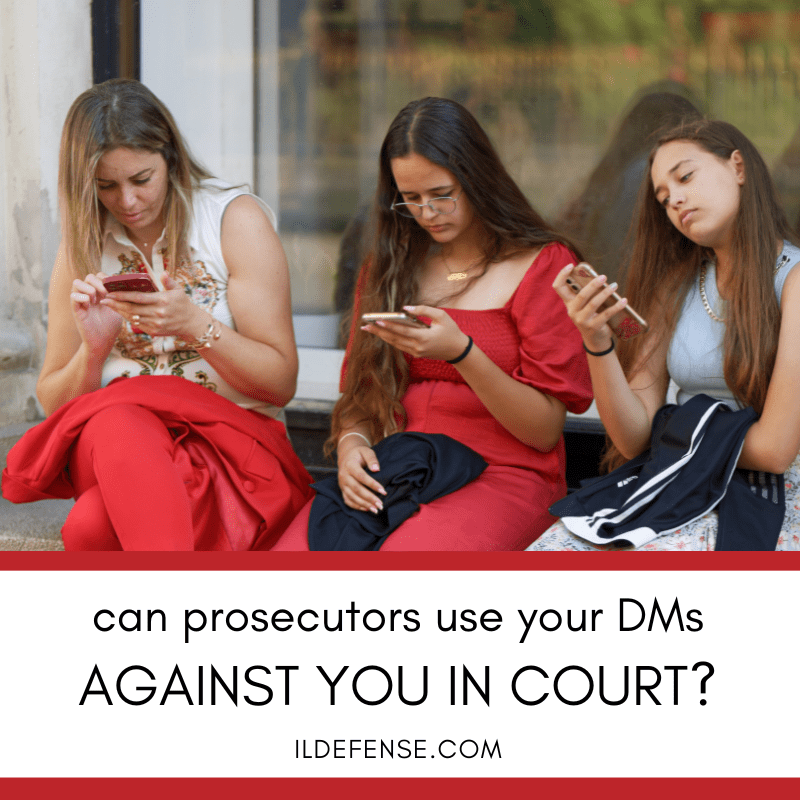
People send direct messages every day without much thought. Instagram, Facebook, Snapchat and other platforms feel informal and private. When a criminal case starts, those messages can suddenly matter a lot. If prosecutors point to your DMs, you need to understand how they get them and how they try to use them in court.
Can Prosecutors Use Social Media DMs As Evidence In Illinois? (Yes—Here’s How)
Prosecutors can use social media messages as evidence in many Illinois criminal cases, but they can’t just wave screenshots around and call it proof. Courts look at how messages were obtained, who sent them and whether they actually show what prosecutors claim. This guide explains the following:
• How prosecutors get social media DMs.
• When police need a warrant and when they don’t.
• How consent affects DM evidence.
• What prosecutors must prove before using messages.
• Why context and timing matter.
Here’s a closer look at each.
How Prosecutors Get Social Media DMs
Most DM evidence comes from one of three places. Sometimes police get messages directly from another person involved in the conversation. That person may hand over screenshots or allow police to view messages on their phone. When that happens, police don’t need a warrant because a private person shared the information voluntarily.
Police may also seize a phone during an investigation and later search it under a warrant. If messages sit on the device and police follow proper procedures, prosecutors may use what they find.
In other cases, police go directly to the social media company. That usually requires legal process, such as a warrant or subpoena, depending on what information police request.
When Police Need A Warrant For DMs
Police generally need a warrant to obtain private message content directly from a social media company. Message content receives stronger privacy protection than basic account information. Judges require police to show probable cause before allowing access.
Police do not need a warrant when someone else voluntarily shares messages with them. If the other person in the conversation hands over DMs, courts usually allow that evidence.
How Consent Changes Everything
Consent plays a major role in DM cases. If you give police access to your phone or accounts, officers may review messages without a warrant. Police often ask casually, and people sometimes agree without realizing how much access they’re giving.
You have the right to refuse consent. Refusing does not imply guilt. Courts examine consent closely and look at whether police obtained it freely and clearly.
What Prosecutors Must Prove In Court
Prosecutors can’t just show messages and move on. They must prove the messages are authentic. That means showing who sent them, when they were sent and that no one altered them.
If the messages relate to a felony or a misdemeanor, judges expect prosecutors to connect the DMs to real people and real events. Screenshots alone often raise questions about accuracy and completeness.
Why Context Matters With DMs
Messages rarely stand on their own. A single DM can look incriminating when pulled out of a longer conversation. Emojis, slang and sarcasm don’t always translate well in court.
Timing also matters. Prosecutors must show when messages were sent and what happened around that time. Missing messages or partial threads can change the meaning entirely.
How DMs Show Up In Different Types Of Cases
Prosecutors use DMs in many types of cases, including drug offenses, threats, theft allegations and cases involving driving behavior, including a DUI. Messages sometimes appear alongside other evidence like phone records or video.
DMs can influence charging decisions even before court. Once prosecutors believe messages support their theory, they often build the case around them.
How Defense Lawyers Challenge DM Evidence
Defense lawyers challenge DM evidence by questioning authenticity, completeness and interpretation. They look at metadata, account access and whether someone else could have sent the messages. They also point out missing context and alternative explanations.
Courts apply Illinois law when deciding whether messages come in as evidence. Judges can exclude messages if prosecutors fail to meet required standards.
Why Early Legal Review Matters
DM evidence often shapes a case early. Once prosecutors rely on messages, they may frame everything around them. Early review helps identify weak points before those messages define the narrative.
A Chicago criminal defense lawyer can review how prosecutors obtained the messages and whether they can actually use them in court. That review can change how a case moves forward.
FAQ About Social Media DMs As Evidence In Illinois
Check out these commonly asked questions about social media DMs as evidence in Illinois. If you don’t see your question here, please call our office and we’ll find you the answers you need.
Can Prosecutors Use Screenshots Of DMs?
Yes, but screenshots alone raise questions. Prosecutors still need to prove who sent the messages and whether the screenshots accurately reflect the conversation.
Can Deleted Messages Be Recovered?
Sometimes. Messages may still exist on devices, backups or company servers depending on timing and platform policies.
Can Messages Be Taken Out Of Context?
Yes. That happens often. Defense lawyers regularly challenge how prosecutors interpret isolated messages.
Can Police Read My DMs Without Telling Me?
Police usually need legal process or consent to access private messages. Secret access without proper authority raises serious legal issues.
Should I Talk To Police About My Messages?
You should speak with a lawyer before answering questions about messages or giving access to accounts. Statements and access decisions can affect your case.
Social media DMs feel private, but they often end up in court. Knowing how prosecutors use them in Illinois helps you protect yourself and respond smartly if messages become part of a criminal case.
Do You Need to Talk to an Attorney?
If you’ve been accused of a crime, we may be able to help you – and don’t worry: It’s completely confidential. Call us at 847-920-4540 or fill out the form below to schedule your free, private consultation with an experienced and skilled Chicago criminal defense attorney now.
Contact Us
"*" indicates required fields